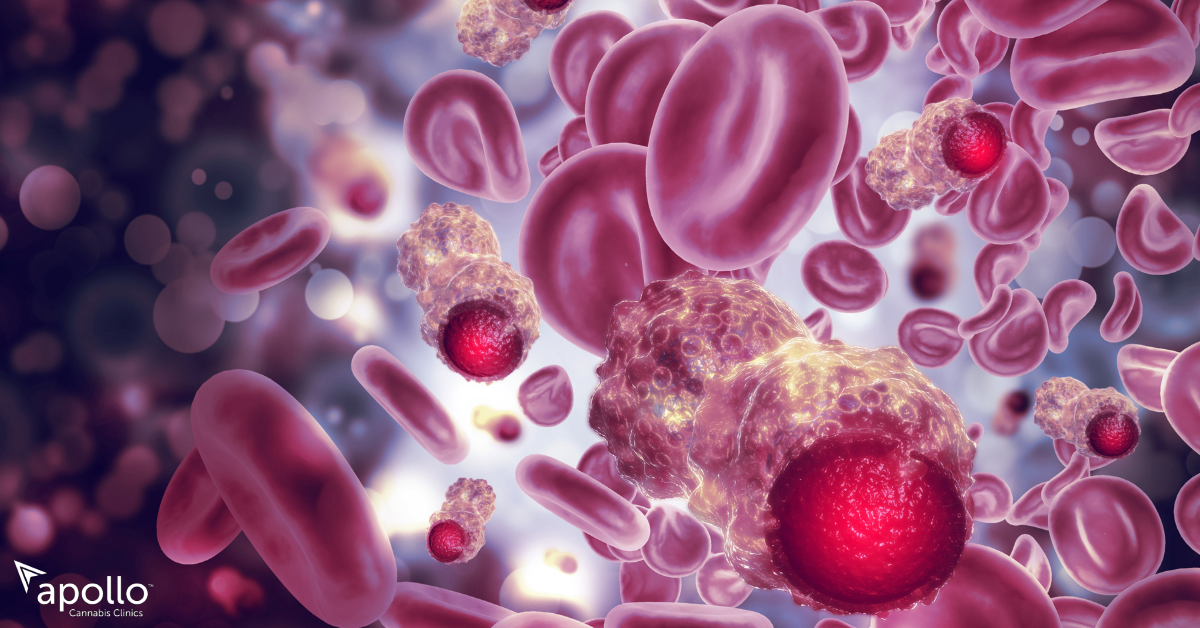
How To Manage CLL Cancer Symptoms with Medical Marijuana
What is CLL Cancer? Chronic Lymphocytic Leukemia (CLL) is a type of blood cancer that affects the bone marrow and lymphatic system. It’s a slow-progressing

If You Are:
If You Are:
Parkinson’s Disease is a degenerative neurological disorder that primarily affects the motor system. Symptoms appear slowly but become progressively more pronounced over time.

Living with Parkinson’s Disease presents unique challenges that affect nearly every aspect of daily life. As a degenerative neurological disorder that primarily affects the motor system, Parkinson’s symptoms appear slowly but become progressively more pronounced over time, making simple tasks increasingly difficult and impacting overall quality of life.
Over 100,000 Canadians are currently living with Parkinson’s Disease, which equates to one in every 500 people in Canada. Concurrently, over 6,600 new cases of Parkinson’s Disease are being diagnosed each year. With cases of the disease on the rise, more research is needed to determine the best treatments for managing symptoms and improving quality of life.
While traditional medications can help, many come with significant side effects that some patients find difficult to tolerate. Subjective reports from patients suggest that medical cannabis may be an effective way to manage the disease, especially in later stages, offering symptom relief with potentially fewer adverse effects.
Parkinson’s Disease is an illness that affects the brain in an area called the substantia nigra. The substantia nigra is responsible for dopamine production in the brain, which eventually carries signals to other parts of the body.
When cells in the substantia nigra begin to die, dopamine levels decrease, disrupting the normal function of the brain circuits that control movement. This disruption leads to the characteristic motor symptoms of Parkinson’s Disease.
People who suffer from Parkinson’s Disease may not recognize symptoms in the beginning, but as brain cells in the substantia nigra start to die, symptoms become more pronounced. The disease typically progresses through several stages:
Parkinson’s Disease manifests through a variety of motor and non-motor symptoms:
These symptoms can significantly impact daily functioning, independence, and overall quality of life, making effective treatment options crucial for those living with the condition.
There is no one specific test to determine if an individual has Parkinson’s Disease. A patient with symptoms of Parkinson’s Disease should consult with a Neurologist to determine if they meet the criteria for the disease. Neurologists will perform a series of physical and neurological examinations, as well as take a thorough medical history on each individual. If the exams, symptoms and background meet certain criteria, the patient will be diagnosed with Parkinson’s Disease.
It is important for doctors to rule out other conditions that may produce similar symptoms, so it is important to see a medical professional early if any of these symptoms arise.
Several factors may increase the likelihood of developing Parkinson’s Disease:
The endocannabinoid system plays a key role in regulating the lifespan of a cell, which is something vitally important in the central nervous system (CNS). Research suggests cannabis compounds may interact with this system in ways that could benefit Parkinson’s patients.
CBD and THC have both been shown to provide therapeutic promise for Parkinson’s Disease during pre-clinical trials, and further investigation is warranted. Additional research may shed light on the correct dosing of THC and CBD individually or combined to most effectively manage Parkinson’s Disease at different stages.
Daily cannabis use may also reduce the number of cell deaths in the substantia nigra and prevent severe symptoms from occurring in later stages of Parkinson’s Disease.
There are numerous subjective reports of how regular medical cannabis use has improved patient’s symptoms. It has been shown to reduce tremors, decrease muscle spasticity, and improve balance.
One U.K. woman, Diane Lee, reported that taking daily cannabis oil cured her tremors and allowed her to come off of other medications which were creating horrible side effects. Ms. Lee had been taking sertraline for several years and found that she could not hold things or sleep adequately due to the medication’s effects. Ms. Lee reported that she takes 2 drops of cannabis oil in the morning, and two at night, and has found that the dose is effective at controlling her tremors. Within 10 minutes of taking the cannabis oil, Ms. Lee is visibly calmer and does not shake.
Cannabis consumption also demonstrates analgesic effects in the body according to the European Journal of Internal Medicine. After six months of daily cannabis consumption, 18% of patients reported that they had reduced or eliminated opioid medications. After six months, 94% of patients reported an improvement in their condition. Cannabis may very well assist patients in managing their condition without the use of addictive opioids and other habit-forming medications.
For Canadians struggling with Parkinson’s Disease, medical cannabis may offer several potential benefits:
Many patients report improvements in core Parkinson’s symptoms, including:
Others find cannabis helpful as a complementary treatment to address the limitations or side effects of conventional Parkinson’s treatments:
Medical cannabis comes in various forms, each with different onset times, durations, and potential benefits for Parkinson’s symptom management. Finding the right option depends on your specific symptoms and lifestyle needs.
The above study on cannabis use recommends starting low and going slow. Cannabis should be introduced in small doses, over a period of two weeks. When symptoms are effectively managed, the correct dose has been achieved.
Your healthcare provider can help determine which forms might work best based on your specific Parkinson’s symptoms, disease stage, and previous experience with cannabis.
If you’re considering medical cannabis for Parkinson’s Disease in Canada, here’s how to begin the process:
To determine if medical cannabis may be appropriate for your situation:
Our streamlined process makes it easy:
If approved, you’ll receive:
Our care doesn’t end with your prescription:
Starting medical cannabis treatment for Parkinson’s is a significant decision. Our team of healthcare professionals specializes in cannabis medicine and can help you navigate this process safely and effectively through online prescription services across Canada.
An important consideration for anyone with Parkinson’s Disease is how medical cannabis might interact with dopaminergic medications and other treatments.
These interactions could affect how your medications work or potentially cause unwanted effects.
For your safety, always:
A comprehensive consultation with a healthcare provider at Apollo Cannabis is essential to ensure your treatment plan considers all aspects of your health, providing the best opportunity for successful symptom management with your online prescription.
Finding the right cannabis dosage for Parkinson’s symptom management is a personalized process requiring individualized guidance. While we recommend consulting with a healthcare professional for personalized advice, here are some general principles:
These general guidelines are based on standards from The College of Family Physicians of Canada but must be tailored to your specific needs by a healthcare provider during your online consultation.
Remember that cannabis affects everyone differently, and finding your optimal dosage may take time and patience. Working with a healthcare provider experienced in cannabis for Parkinson’s can significantly improve your results when getting an online prescription in Canada.
Find everything you need to know about being a medical cannabis patient below.
Yes, medical cannabis is legal in Canada with a valid prescription. While Parkinson’s Disease isn’t automatically qualifying, healthcare providers can prescribe cannabis if they determine it may benefit your condition, especially when conventional treatments have been inadequate or caused significant side ef
No, cannabis is not a cure for Parkinson’s Disease. It should be viewed as a symptom management tool rather than a disease-modifying treatment. However, some research suggests it may have neuroprotective properties that could potentially slow disease progression, though more studies are needed to confirm this effect.
CBD (cannabidiol) and THC (tetrahydrocannabinol) affect Parkinson’s symptoms differently:
Yes, many patients use medical cannabis alongside traditional Parkinson’s medications. Some find they can gradually reduce their dosage of other medications when adding cannabis to their regimen, but this should always be done under medical supervision to ensure safety and effectiveness.
THC can potentially affect balance and coordination, particularly in higher doses. However, many Parkinson’s patients actually report improved balance with appropriate cannabis dosing. Starting with low doses, using CBD-dominant products during the day, and working closely with your healthcare provider can help minimize any negative effects on balance.
The timeline varies by individual and consumption method. Some patients report noticeable tremor reduction within minutes of inhalation methods, while oils and capsules may take 30-90 minutes to take effect. For potential neuroprotective benefits, consistent use over weeks or months may be necessary.
Some private insurers now offer coverage for medical cannabis, but coverage varies widely. Check with your insurance provider about specific policies. Many patients also qualify for medical cannabis expenses as tax deductions.
What is CLL Cancer? Chronic Lymphocytic Leukemia (CLL) is a type of blood cancer that affects the bone marrow and lymphatic system. It’s a slow-progressing

Panic attacks are sudden episodes of intense discomfort or fear, typically ranging from 3-30 minutes. They are characterized by intense and often overlapping physical and

“We have demonstrated that regulated medical cannabis products can be incorporated into the care of cancer patients safely and effectively. After three months, the patients